Passoaland
October 22nd, 2009Space is big, space is dark
September 14th, 2009Space is big, space is dark, it’s hard to find a place to park
– unknown
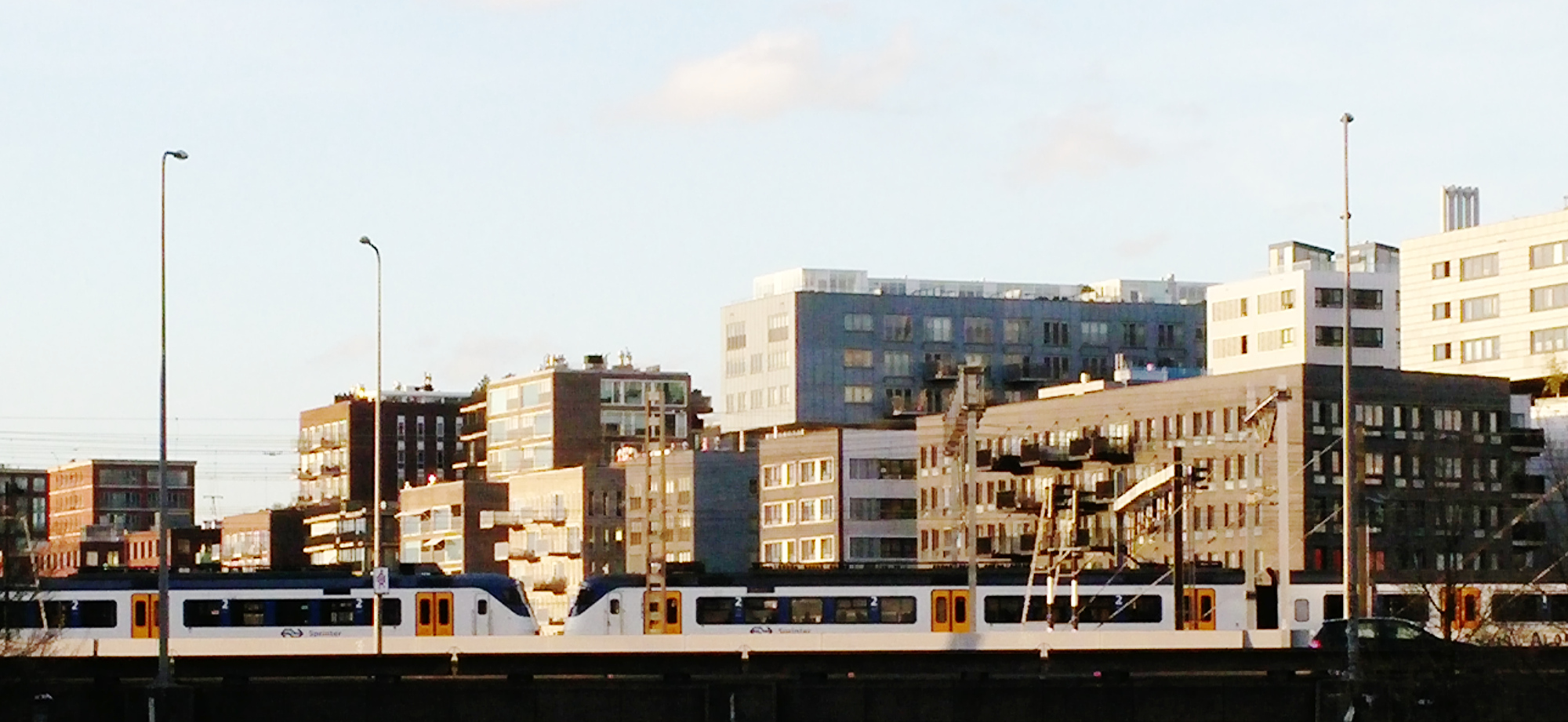
Parking along the canals is now so expensive that you can fit a bus in the empty spots.
For those who can afford it, it is convenient. I saw a Porsche Cayenna Turbo S with a license plate from Monaco the other day. Creamy white it was.
One of the strongest forces of social progress - one of the most democratic, most emancipatory, most liberating forces of the twentieth century - has once again been reduced to a plaything for the rich.
Holiday bar
July 15th, 2009From the famous Dutch poet Cerberus Platvis:
Het café is op vakantie
De kastelein die leest
Een lege bar vol lege krukken
Nog niet van hun plek geweest
Van de ellebogen aan de toog
Resteert alleen verweerde lak
Een krant ligt netjes opgevouwen
In de hoek een korrel muizenkak
Glanzend weerkaatsen de rijen met glazen
Gestapelde sarcofagen van glas
Even klinkt er geen muziek
Zachtjes zoemt het motormechaniek
Dust to dust
July 6th, 2009Over the weekend, AWACS died.
AWACS was my first “PC” (as opposed to the Macs and Atari’s I used before), and the first and last computer I ever built from parts.
I bought it as a set of parts from Overseas Computing, perhaps the shadiest, but certainly the unfriendly computer equipment retailer ever.
Sure enough, when I got home, it didn’t work. I read the manual and tried a few jumper settings, then spent the rest of the night staring at the dead box.
When I took it back the next day, the store clerk replaced what turned out to be a broken power supply. Instead of apologizing, he gave me a reprimand. “You shouldn’t be doing this if you haven’t done it before!” I still remember this because it struck me as illogical and frankly indefensible at the time, a shining example of everything that is wrong with people in particular and the whole world in general.
But he may have been right in a sense.
I bought a dual Pentium II motherboard. The Pentium II was quite expensive, so I got a single one, with the idea to upgrade to a dual CPU setup later. Of course that never happened. By the time I was looking to upgrade the CPU they were no longer easily available, and the CPUs that were available wouldn’t fit in the motherboard.
I ended up spending a lot more money, buying a new motherboard and two new Pentium III CPUs in Slot 1 packaging, big heavy slabs of silicon and plastic not unlike old game cartridges. The old motherboard I gave to an old friend, someone I first met through the dial-up BBS “Archie” run by the VPRO in the late eighties/early nineties.
AWACS was the last computer my father gave to me. Now after more than a decade of uninterrupted service the plastics have become yellow and brittle and the efficient whirr-click of the drives has turned into a laborious whine. The optical drives died a long time ago.
And this weekend, one of the hard drives died. After some gentle prodding I managed to bring it back to life, sort of. Then I went out and bought a new machine - just the first thing that seemed decent and wasn’t too expensive.
I copied across a decade worth of files, rebooted, and logged in. Everything was there, like nothing ever happened. Machines have no sense of ceremony.
I’ve called the new machine Ripley, after the greatest female character in popular culture ever. And with a new name comes new resolve.
If AWACS was about command and control at a distance, about detachment and the view from thirty-thousand feet, then Ripley is about being there and getting your ass kicked. And still not giving up.
Ode to summer
July 3rd, 2009From the famous Dutch poet Cerberus Platvis:
Als je tot laat op het terras kunt zitten bomen met een fles wijn terwijl de stad wordt verzwolgen door een bloedrode schemering en de meisjes gretig de laatste restjes van hun toetjes met Drambuie van hun lippen likken;
Het glinsterende water als zwart fluweel de kademuur streelt en je onbekommerd keuvelend luistert naar haar snakkend gekabbel en gespat in de zware muskusnacht;
Een fonkelende druppel langzaam verdampt in het glanzende donshaar op de schouders van een blonde jongen die aan de rand van het zwembad zit op te drogen;
De felrode hakken van een getrouwde vrouw als kletterende sabels over de stoeptegels glijden en een verborgen gedachte als een schittering door de ogen achter haar zonnebril speelt;
Het grijs van de slapende stad verbleekt onder het geroffel van de bundels licht die zich onverzadigbaar op de muren en de mortel en de raamkozijnen storten om dwars door de ruiten tot in iedere stoffige plooi van de betonnen huizen door te dringen;
Als de lucht in het park trilt van vermoeidheid, het gras dor en geel is van hitte en stof, en de nacht neerdaalt als een kus in het donker…
Dan is het zomer
Catfood
July 3rd, 2009I noticed him standing in front of me in the checkout line of the supermarket. He was buying some bread rolls and a couple of cans of catfood. As the cashier scanned them the prices flashed blue across the display. Fifty-nine cents, fifty-nine cents, fifty-nine cents, eighty-seven cents…
I recognized his face. He’s a street musician who often stands at the crossroads near the market square. He plays tunes on a standing bass, mostly golden oldies and folk songs. The enormous instrument sways gently to and fro as his hands carress the strings and neck, almost as if he is dancing with it. He stamps his feet on a wooden box for a beat. His voice is hoarse, the words almost shouted.
The man is an absolute gentleman, always dressed in a dark suit with polished black shoes. But his trademark is the hat, which he raises or at least touches for every donation, no matter how small. He does this without exception, regardless of whether he receives a single donation or ten in a row - he will raise his hat for every single person, continuining to play the bass and muttering “thanks, thank you, thanks” to each person individually, with a smile that betrays only gratitude and grace.
He works the bass, and the bass works him. Sweating and singing, he bangs out basslines, day in day out, raising his hat and smiling his smile.
And now here he is, with the same smile, the same gentle demeanour, the same suit and hat, buying bread rolls and catfood.
I wondered about the catfood. I had never seen him with a cat, or any kind of pet for that matter. I had a hard time imagining it - this man was so humane that there seemed something inappropriate about the image of him roaming the city with an animal in tow. It just seemed … below him.
Then I realized the catfood was for him.
Did you find my weed?
June 28th, 2009Woodman’s fire
June 14th, 2009You make this by taking a log of wood and carving it up like a pizza. Leave the bottom 30-50 cm intact so there is plenty of ground clearance.
Then put a firestarter cube in the center.
Lasts for hours. Burns bright. Takes care of you throughout the night.
Cat on a hot tin roof
June 11th, 2009
You’re not a good person because you don’t drink, or because you don’t eat meat, or because you recycle your garbage. It’s not as simple as getting rid of bad habits or being true to doctrine.
This endless parade of experts dishing out well intended advice on how to optimize your performance in bed, how to maximize your productivity at work, how to stay fit at any age - but for what? A life of neverending self-improvement, full of furious potential, signifying nothing?
~
Late last night, slouched on the couch, remote control in hand, I zapped through the TV landscape. There were a couple of options: Discovery channel was showing a documentary on Future Weapons, Fashion TV had the latest swimwear trends for 2009, and then there was Turner Classic Movies. I switched back and forth, but kept coming back to TCM. The color and atmosphere in these old movies is enchanting. You just have to catch another glimpse, like at a beautiful woman passing by on the street.
That night TCM broadcast the 1958 movie “Cat on a hot tin roof“, with the glorious Elizabeth Taylor and Paul Newman, pictured above in a scene of marital crisis. Newman plays son Brick, who is destined to inherit his father’s massive estate. But Brick is a troubled soul, who fights his demons with large quantities of whiskey. Worse, he snubs his wife in the bedroom and seems hesitant to establish a family of his own.
The inevitable confrontation between Brick and his father, Big Daddy, plays out during a get-together at the family ranch. With Brick drunk and Big Daddy suffering from “spastic bowels” (a euphemism for cancer), they chase eachother around the house, pleading, confessing, trading accusations and insults, thrusting and parrying like bulls. The son lectures his father on hypocrisy and sincerity, the father ridicules his son for his refusal to accept responsibility.
The father is a fat hulking tyrant, the son a hopeless drunk. But they don’t argue about diets and 12-step detox programs. They argue about what it means to live a good life. They argue about purity and sacrifice and love. And they understand that being useful means allowing yourself to be used.
~
We do not need more experts to tell us how to indefinitely preserve ourselves, like pickles. We need experts like Big Daddy and Brick. Flawed experts, who argue with us and confuse us and convince us, about what it means to be a good person, and who remind us of our duty towards ourselves, our families, & our fellow man.
We need experts who remind us that the expiration date on our packaging is not a threat. Instead it is a promise - a promise of freshness and fitness for purpose.